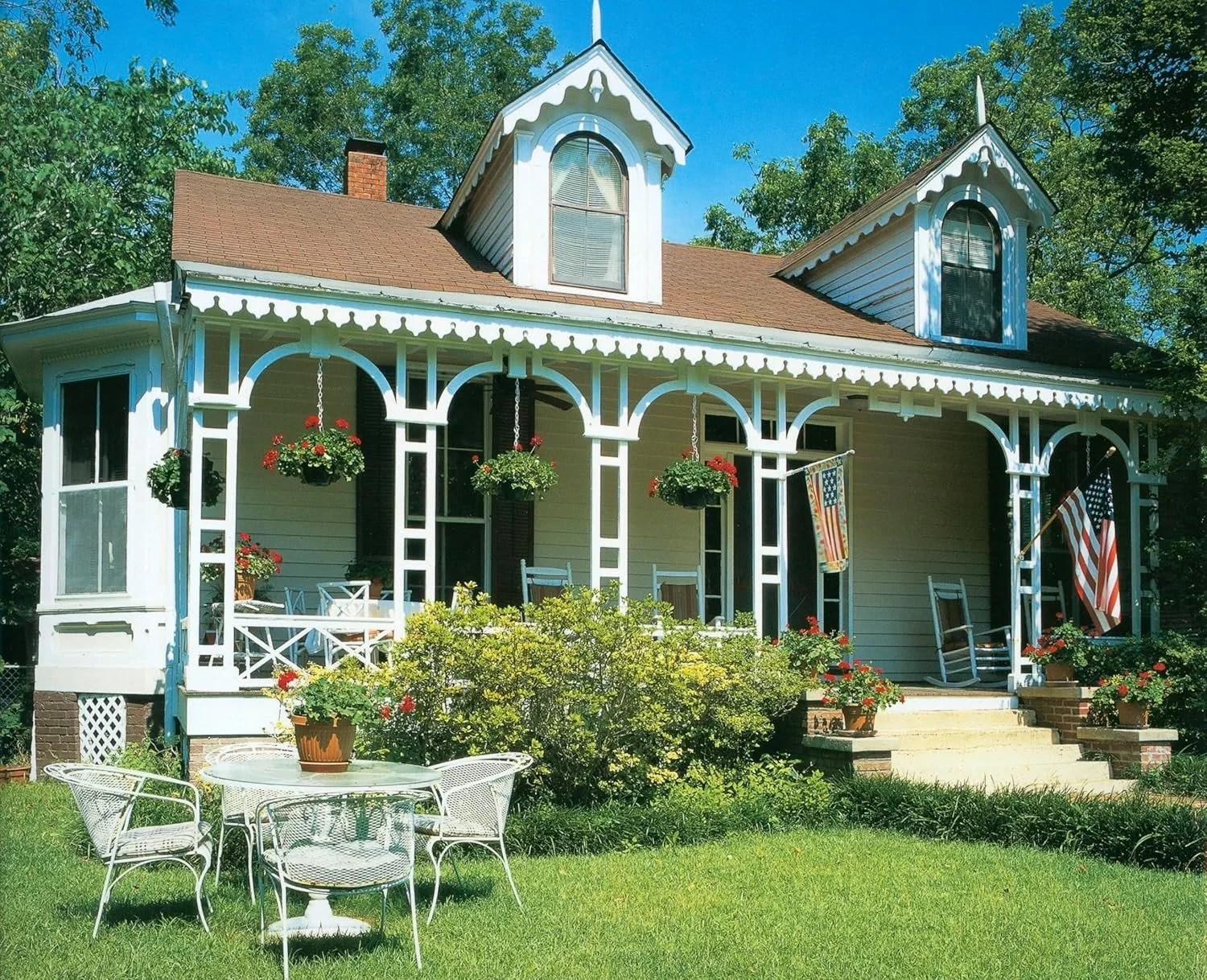
Trigg Doyle Falkner House
Overview
The estate of Betty Jane Gary is proposing to subdivide the current +/- 2.07 acre property into 9 lots (see proposed plat to right). The current property features frontage on both Buchanan and Lincoln Avenues as well as South 11th Street. The existing historic house (The Trigg Doyle Falkner House) would be on one of the 9 lots with an additional 3 lots fronting Lincoln Avenue and 5 additional lots fronting Buchanan.
This case was heard during the April Planning Commission meeting and the full application can be found in the archives. The Planning Commission did not vote to approve the application as submitted.
Zoning for the property is Traditional Suburban Residential and it sits within the South Lamar Historic District and is subject to Oxford’s Conservation Overlay guidelines.
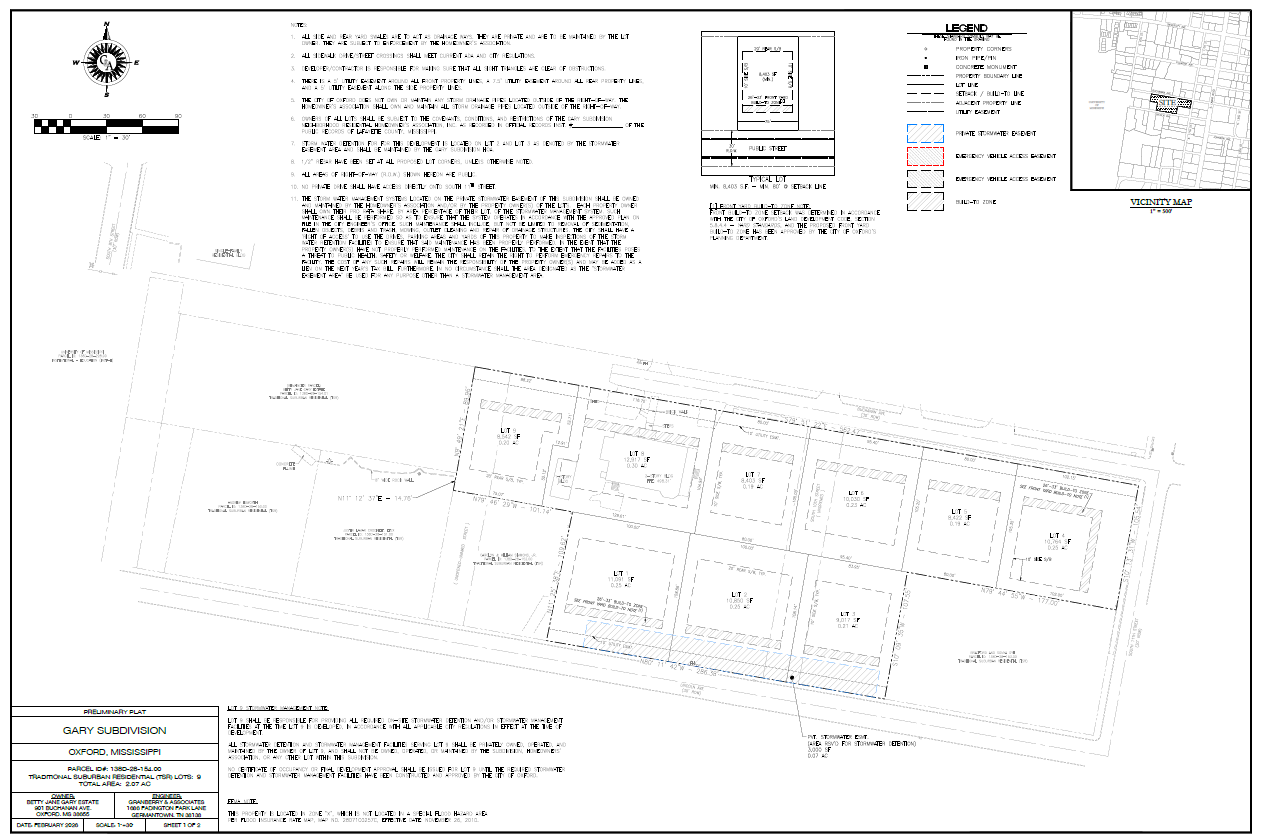
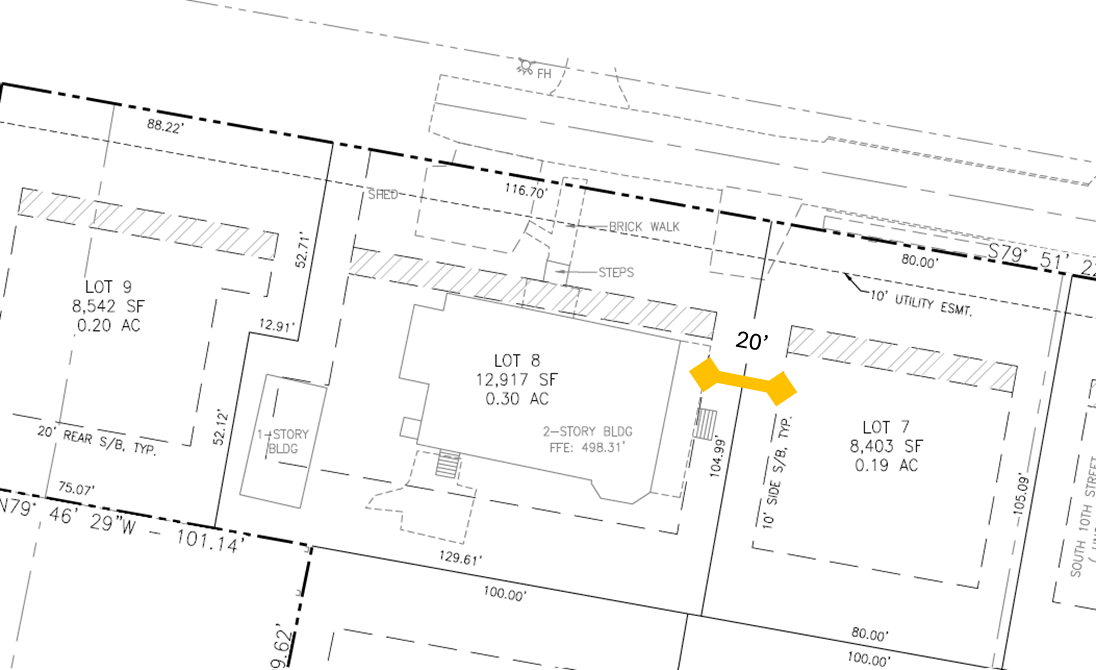
Although the address of the house is 910 Buchanan Avenue, the front of the historic home faces South 11th Street and has an expansive yard between the front porch and the edge of the road. As shown in the diagram to the left, Lot 8 is proposed as the future lot for the existing home.
Oxford’s guidelines for Suburban Residential require a set back of 10 feet for side property lines and 20 feet on the front. The current proposal shows only 10 feet between the current front porch and the property line of Lot 7. It also shows a “front” set back at what is currently considered the side of the house. As Lot 7 has only a 10 foot set back, in the future, the iconic front porch of the house could be 20 feet from the side wall of a new building.
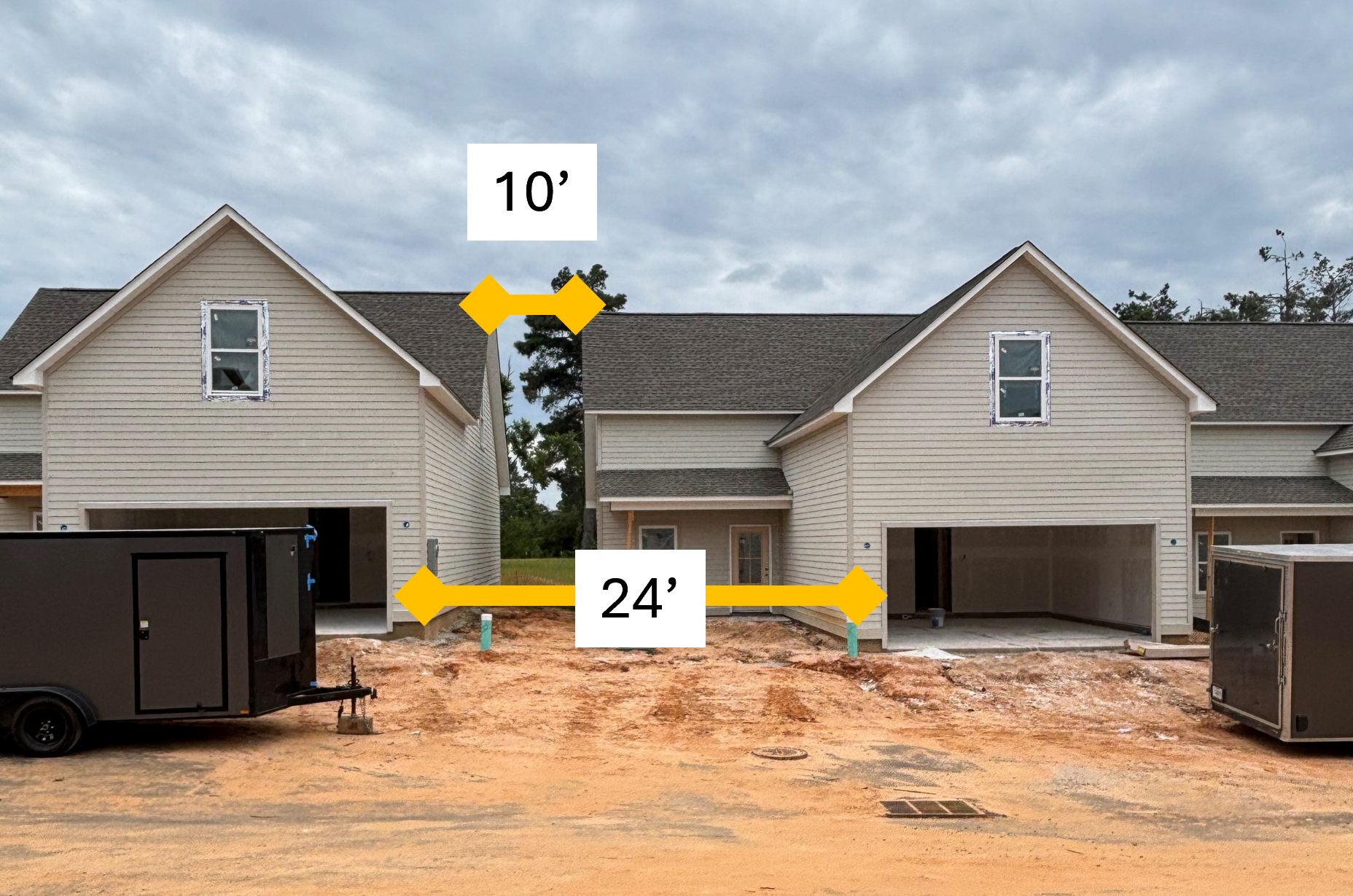
For reference on the visual impact of this proximity, see the picture below of new construction where the rear walls are 10 feet apart and the fronts of the garages are 24 feet apart.
As noted above, this property is in a Neighborhood Conservation Overlay and development falls under their guidelines. From the Land Development Code:
The City of Oxford has distinctive older neighborhoods and commercial areas which contribute significantly to the overall character and identity of the community and are worthy of a level of added protection beyond standard zoning regulations. Some are within designated historic districts while others, even without historic, architectural, or cultural significance, contribute to the context of the city and give their neighborhoods a sense of place. Therefore the purpose of the Neighborhood Conservation Overlay District in these older residential neighborhoods and their adjoining commercial areas is to address the following goals:
a. To protect and strengthen desirable and distinctive physical features, design characteristics, and the unique identity, charm and flavor of Oxford’s older neighborhoods;
b. To protect and enhance the livability of the city, strengthening civic pride;
c. To promote new compatible development and prevent blighting influences and reduce conflict caused by insensitive and incompatible development;
d. To promote and retain affordable housing; and
e. To encourage development design that builds connectivity to adjacent developments and the surrounding community and makes a positive contribution to Oxford’s evolving cityscape.